Biloxi: 228-435-3000 | Ocean Springs: 228-872-6000 | Hattiesburg: 601-583-5000
Picayune Truck Accident Lawyer: Your Case Is Decided Twenty Six Miles Up I-59 In A Courthouse The TV Lawyer Has Never Entered
The TV lawyer running truck ads into Picayune is a shyster and a fraud. Pearl River County has never once seen him put a trucking company in front of a jury. He has never made the drive to that courthouse for anybody, and he is not starting with you. Everything he says into that camera about fighting the trucking company is a con.
Twenty six miles. That is the distance up Interstate 59 from where the truck hit you in Picayune to the Pearl River County Circuit Court in Poplarville, where your case actually gets decided.
Most people never learn that until it is too late to matter. They assume the fight happens where the wreck happened. It happens in a room you have never stood in, in a town twenty six miles up the same interstate that rig was running when it came into your lane. The trucking company’s lawyers have made that drive many times.
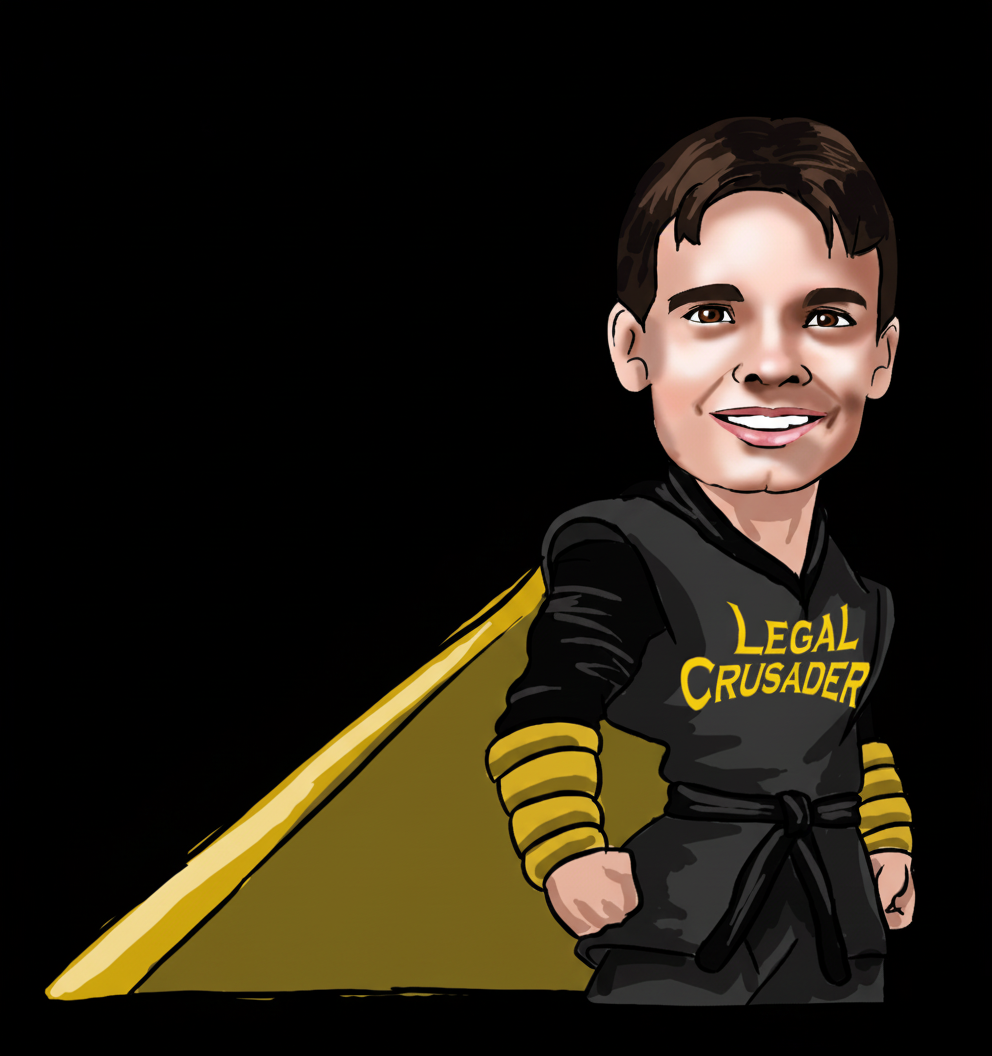
I am Jay Foster. The Legal Crusader. As a Picayune truck accident lawyer I have spent decades making that drive and taking these companies apart in front of juries. When I take a Pearl River County file, the demand to freeze their evidence goes out that day.
The Engineer Who Never Watched The Engine Fire
Picture an engineer who can work a rocket engine’s thrust curve on paper down to the decimal. He knows every equation in the book. He has never once stood in a control room and felt a real test firing shake the ground under his boots.
All that math evaporates the second real fuel, real pressure, and real consequence enter the building. A man who has only ever done the arithmetic freezes when the fire actually lights, and somebody else pays for the freeze.
The TV lawyer is that engineer. He knows the vocabulary of a trucking case. Twelve people from this county have never once heard him try one of these. He has read about trial the way that engineer reads about a test firing, from a desk, nowhere near the noise.
He is a scam artist with a media budget, and the difference costs you money in a way you can measure. He cannot tell you what your case is worth. He can only tell you what he has always settled for, because he has never once taken one of these all the way and found out.
The insurance company knows which of those two men just called them, and it prices the opening offer on the answer before you hear a number.
Mile Zero And Mile Twenty Six, The Same Road, Two Different Stories
At mile zero you are on the shoulder of Interstate 59. Hot asphalt and diesel in the air. Glass on the pavement catching the sun. A trooper’s radio going somewhere behind you. You are thinking about your kids and about the pain starting to announce itself in your neck, and you have no idea this crash already has a filing address in another town.
At mile twenty six, inside a building you have never entered, the machinery deciding your case is already turning. The trucking company’s insurer knows that docket. It knows which judge is likely to draw this. It knows which lawyers have stood in front of a Pearl River County jury and which ones have only ever stood in front of a camera.
Somewhere between those two mile markers a response coordinator is already pulling that truck’s electronic log, and an adjuster is already reading the driver’s qualification file. None of that waits on you to hire anybody. It happens whether you call today or in three weeks. The only open question is whether one single person is doing the same work on your side.
Be clear about where the real injury comes from. The trucking company is your adversary and never pretended to be anything else. The TV lawyer told you he was on your side, took your signature, and then never made that drive on your behalf. Not to file a motion. Not to sit a hearing. Not once. He is not fighting the trucking company. He is standing beside you while they win, taking a cut for the privilege.
What Federal Rules Actually Govern That Rig On Interstate 59
Interstate 59 through Pearl River County is not a local road. It is a federal freight artery, and federal rules govern everything moving on it.
Take tires, because the stake behind that rule is easy to see. A driver is required to actually check tread and tire condition before every trip, not walk past the truck and hope. Skip that check and an underinflated tire on Interstate 59 in July heat runs for hours building temperature inside the rubber until it lets go all at once at highway speed. When a steer tire fails on eighty thousand pounds the truck does not drift. It lunges, and whatever is beside it in the next lane absorbs that lunge.
Driving hour limits exist because a fatigued driver reacts like a drunk one, and the company that leaned on him to run past those hours made a business decision you paid for. Driver qualification rules exist so the man steering that rig is fit to steer it. Load securement rules exist because of what actually gets hauled through this county.
The TV lawyer does not know any of these by feel. He would be looking them up mid negotiation while the defense lawyers on the other end have had them memorized for twenty years.
Six Companies Might Owe You And He Finds One
A car wreck usually puts one name on the report. A commercial truck crash on Interstate 59 can carry six, each with its own policy behind it. The man at the wheel. The outfit whose federal number is stenciled on that door. Whoever booked the load without once pulling that outfit’s safety history. Whoever packed the trailer. Whoever owns the tractor and let a service interval slide. Whoever put a signature on the last inspection.
The TV lawyer finds one, almost always the driver, because that is the only name printed on the report his secretary pulled.
Here is a pattern that runs through this county more than people realize. A shipper is moving an oversized piece of equipment, the kind of heavy load headed toward the test facilities down near the coast where rocket engines get bolted down and fired. The schedule is tight. Nobody verifies the securement is rated for that weight distribution. Forty miles later on Interstate 59 the load shifts on a curve and the driver never had a chance.
The broker who arranged that pickup never asked anyone to prove the load was tied down right, because asking slows the next booking. Nobody in that chain thinks of himself as responsible. Working off a crash report, the TV lawyer only ever finds the driver, and the company that actually created the danger never receives so much as a letter.
Heavy industrial freight running to the Stennis area does not look like a normal delivery. Some of those loads run wider than a lane and heavier than a standard trailer rating, secured with chains and binders rated for that exact shape, not a generic strap job. Cutting a corner on one of those is the difference between securement that holds through a hard brake and several tons of steel moving the instant the driver reacts to traffic ahead.
Washington sets the bottom rung on that company’s liability coverage at seven hundred fifty thousand dollars, and most outfits running this lane sit well above the rung. Whoever loaded the freight carries a policy of their own on a separate floor entirely. The TV lawyer has never gotten to that floor, for the simple reason that he has never once gone looking for the stairs.
The Man Who Wants Your Signature Before The Swelling Goes Down
Somebody from the TV lawyer’s office wants to see you today, contract already printed, before you have finished your first round of imaging. Ask why the hurry.
A man offering something worth having gives you time to think about it. A man who wants your name on paper before the swelling in your face goes down is not interested in you thinking.
Sign that fast and you never see what is buried underneath. His cut leaves first. Then copying charges for records that cost pennies to print, expert fees, deposition costs, and file administration charges that mostly exist on the invoice. Stack all of it and a large share of your recovery quietly disappears into line items nobody read out loud to you.
He ends up with more of your settlement than you do while you are still driving to physical therapy twice a week. Ask him for an itemized breakdown in writing before you sign anything and watch how long that request takes to come back. A lawyer with nothing to hide answers it the same day.
The Number In Their File Before Anybody Called You
The trucking company’s insurer built a figure in a file with your name on it before you hired anyone. Their people calculated what a properly built case, taken the full twenty six miles to a Pearl River County jury, would actually cost them.
What they offer the TV lawyer is a fraction of that, because they have already priced in what he does when pressed. He has no way to know how far off the first number is, having never once found out.
You have never had a sum like that in front of you before, so it sounds enormous, and you have no way to test it. Same as you could not tell if a mechanic charged you four times what a part costs, because he speaks that language every day and you never had reason to learn it. Here is the arithmetic laid out both ways.
WHAT THIS COSTS THEM TWENTY SIX MILES UP THE ROAD: $7,250,000
| HE NEVER MAKES THE DRIVE | I MAKE THE DRIVE |
|---|---|
| TV Lawyer’s Never-Leave-The-Office Offer $1,750,000 | The Number Their Own File Already Carries $7,250,000 |
| TV Lawyer Fees & Costs Nobody Itemized $1,240,000 | My Fee And Costs, One Combined Line $2,030,000 |
| What Is Left When He Is Finished $510,000 | What Is Left When I Am $5,220,000 |
BOTTOM LINE: YOU GOT SCREWED FOR $4,710,000
He was building a personal shooting range on his property.
Identical wreck. Identical injuries. Identical company on the far side. The only thing that changed was which lawyer was willing to drive to Poplarville, and it moved more than four and a half million dollars.
The Crush Injury Nobody Explains Until You Are Living It
Eighty thousand pounds does not produce a bruise and a sore back. It produces brain injuries, spinal damage, burns, multiple fractures, and crush injuries most people never hear the real name for until a doctor uses it on them.
A crush injury happens when a limb is pinned under weight long enough that the muscle inside starts dying from pressure, cut off from blood while the person is still trapped and still awake. When the pressure finally comes off, that dead tissue dumps protein into the bloodstream that can shut the kidneys down within hours if nobody catches it fast.
Surgeons sometimes have to open the fascia right there in the emergency room just to relieve what is building inside the limb before the whole thing is lost. Some of these end in amputation no matter how fast everyone moved. Some end with a limb that survives but never works right again, nerve damage that turns buttoning a shirt into something you have to relearn.
Highland Community Hospital on Highland Parkway here in Picayune is a Level IV facility. It stabilizes you. It is not built to manage a crush injury with kidney involvement past those first critical hours, which means transfer north to Forrest General in Hattiesburg where the specialists and the dialysis equipment actually are. Every mile of that transfer is a mile of declining kidney function if the protein already got loose.
None of that appears anywhere on a crash report. It appears months later as a dialysis schedule, a surgery count, and a level of daily pain a jury has to be shown rather than told about. Dialysis three times a week does not stop because a case settled. A prosthetic is not a one time purchase, it gets replaced as it wears and as the body changes. That is grocery money and rent money keeping a body running that broke because somebody skipped a tire check.
The adjuster has a figure written next to every one of those lines before he ever dials you, and the figure he reads out is not the one on his screen.
Their Clock And The Courthouse Clock Do Not Run At The Same Speed
Put the question to the TV lawyer and you get one answer, three years, straight off Section 15-1-49. It is a convenient answer for a man who intends to close your file in ninety days, because it keeps you calm while he does it.
He is not lying about the number. He is lying by leaving out which clock actually matters.
After the window closes, the value of your claim runs out between your fingers the way water does when you try to carry it in cupped hands. Camera footage from that cab goes in hours or days. The electronic log holding the driver’s real hours sits on a rolling window before newer data replaces it. Drug screens, the morning inspection sheet, and the dispatch records showing how hard that man was pushed to make schedule all live on the company’s internal timeline, which keeps moving whether or not anybody has filed anything.
A written demand to preserve every piece of it is the only thing that stops that timeline, and it has to land while the records still exist. Wait while a secretary works down to your file and the evidence fight was decided before anyone argued it.
There is a second statute he will mention only if cornered. Section 11-7-15 means a share of the blame on your side shrinks the check without closing the door, and the adjuster will press that lever as far as you let him before you know what it really does.
Three Promises In Writing From Your Picayune Truck Accident Lawyer
Before a single hour gets billed to your Pearl River County file, these three are already signed into the agreement. Print them out. Hand them across the desk to the TV lawyer and ask him to match the language. Watch what he does instead.
My Solid-Ground Fair Fee Promise
The Foster Fair Fee Guarantee is written into your contract before I open the file. You walk away with more than I collect. Every time. If expenses land in a way that would break that, my fee comes down until it holds. Solid ground means the promise does not shift underneath you once the numbers are real, which is exactly when most promises do.
The federal rules described on this page come straight from the Federal Motor Carrier Safety Administration and not from a billboard. Read them yourself.
The No-Second-Guessing Direct Access Guarantee
You leave my office with my cell number written in your file. Questions about your case get answered by the man handling it, in his own voice, not relayed through somebody reading a note about a conversation she missed. There is no queue to sit in and no slip to fill out. What you get in week one is identical to what you get eleven months later when the case has gone quiet and you want to know why.
The Backed-By-Cash No-Pressure Guarantee
Money arrives on the table and I give you the unvarnished version. What their number reveals about how cheaply they have priced your injuries, where I think this lands after another six months of work, and the choice I would make sitting where you sit. Then you choose, and I do not lobby you. Whether my year is busy has nothing to do with whether you sign, and if walking away from that offer is the stronger play, I am the one who says it out loud first.
My Solid-Ground Fair Fee Promise. The No-Second-Guessing Direct Access Guarantee. The Backed-By-Cash No-Pressure Guarantee. Signed and in the agreement before your case even gets a number assigned to it. Not one man buying truck ads into this county has ever put his name under any of that language.
I turn down cases. If you want to sign whatever gets put in front of you before your own doctor has finished treating you, I am the wrong lawyer. If you want somebody who treats a federal trucking case like a fender bender with extra zeroes on it, also the wrong lawyer. Read the free book first and then decide whether you want me at all.
▼ Get Your FREE Book Right Now ▼
Fill Out The Form Below And I Will Send It Immediately
Where Your Picayune Case Is Actually Filed
Poplarville is where this ends up. The county seat sits twenty six miles north on Interstate 59, and the Pearl River County Circuit Court on South Main Street is the building your complaint gets stamped in. Poplarville, not Picayune, is where the courthouse sits and where a jury from this county will hear what that trucking company chose to do.
The Poplarville truck accident lawyer page covers cases in the county seat itself. The Wiggins truck accident lawyer page covers the Stone County corridor east of here. The Mississippi truck accident lawyer hub covers how these cases work statewide.
Questions I Get After An Interstate 59 Truck Wreck
Where Does A Picayune Truck Accident Lawyer Actually File My Case?
Twenty six miles north of here, in Poplarville, at the Pearl River County Circuit Court on South Main Street. That surprises most people, because they assume the case belongs where the wreck happened. It does not. A lawyer who has never made that drive on anybody’s behalf is not equipped to make it on yours, and the defense firm on the other side already knows which lawyers have walked into that building and which have not.
How Fast Does The Proof Actually Disappear?
Faster than almost anyone expects. Footage from the cab can be gone inside a day or two. The electronic log carrying the driver’s real hours rides a rolling window until newer data pushes it off. Drug screens and inspection sheets sit on the company’s own retention schedule, which nobody there has any reason to pause for you. A written preservation demand is what freezes all of it, and it has to arrive while the records are still there to freeze.
What If Part Of The Wreck Was My Fault?
You can still recover. Under Section 11-7-15 your share of the blame reduces what you collect rather than ending the claim outright. Expect the adjuster to push as much of that share onto you as you will tolerate, because every point he assigns you comes off the check. Beating him back takes that company’s own compliance paperwork, requested early, in the hands of somebody who knows which pages should be there and are not.
Is The First Offer Ever The Real Number?
No. Their insurer already built an internal figure based on what this case costs them if it goes the full distance to a Pearl River County jury. The opening offer is a fraction of that figure, priced on the assumption that nobody on your side intends to go the distance. Against a lawyer who has never tried one of these, that assumption has been correct every single time.
Which Hospital Handles The Serious Injuries Here?
Highland Community Hospital on Highland Parkway in Picayune is a Level IV facility built to stabilize you. Crush injuries, brain injuries, and anything with kidney involvement transfer north to Forrest General Hospital in Hattiesburg, a Level II trauma center. Records come out of both stops, and the defense team is counting on nobody on your side collecting the second set.
What Does The Foster Fair Fee Guarantee Commit You To?
That you keep more of your own case than I do, in writing, signed before I begin work, with no exception written under it. If the arithmetic at resolution would break that promise, I reduce my fee until it does not. Nobody else advertising truck cases into Pearl River County will put that in front of you before you sign, because their model depends on the reverse.
Picayune Truck Accident Cases I Handle
Picayune 18-Wheeler Accident Lawyer
Picayune Box Truck Accident Lawyer
Picayune Delivery Truck Accident Lawyer
Picayune Tanker Truck Accident Lawyer
Picayune Dump Truck Accident Lawyer
Picayune Garbage Truck Accident Lawyer
Picayune Concrete Truck Accident Lawyer
Picayune Logging Truck Accident Lawyer
Picayune Jackknife Truck Accident Lawyer
Picayune Rollover Truck Accident Lawyer
Picayune Underride Truck Accident Lawyer
Picayune Rear-End Truck Accident Lawyer
Picayune Head-On Truck Accident Lawyer
Picayune Blind Spot Truck Accident Lawyer
Picayune Fatigued Driving Truck Accident Lawyer
Picayune Wide Turn Truck Accident Lawyer
Picayune Distracted Driving Truck Accident Lawyer
Picayune Tire Blowout Truck Accident Lawyer
P.S. The company whose driver hit you on Interstate 59 knows the drive to Poplarville by heart. Their lawyers had the electronic log, the qualification file, and the inspection sheet in hand before you had picked a hospital. Somewhere close behind them is a man with a printed contract hoping to get your signature before you learn any of this. Get the free book first and find out what all of them are counting on you never learning.
P.P.S. My Solid-Ground Fair Fee Promise is in the contract before I bill an hour. Your take-home beats my fee or my fee comes down. Signed paper, not a slogan.
▼ Get Your FREE Book Right Now ▼
Fill Out The Form Below And I Will Send It Immediately