Biloxi: 228-435-3000 | Ocean Springs: 228-872-6000 | Hattiesburg: 601-583-5000
Vancleave Rear-End Truck Accident Lawyer: The Federal Following Distance Regulation Says The Driver Was Already In Violation Before Your Brake Lights Activated And The ELD Data Proves It
If you need a Vancleave rear-end truck accident lawyer, a commercial truck that rear-ends a passenger vehicle on Highway 57 was either following too close, going too fast, or operating with brakes that could not stop the vehicle within the distance federal law required. There is no other explanation that survives the math. A fully loaded 80,000-pound truck at 55 miles per hour on Highway 57 needs approximately 400 feet to stop under ideal conditions. Worn brakes, wet pavement, or a load above the truck’s weight rating extend that distance. A driver who never built that buffer was already outside Section 63-3-619 before your brake lights came on. The occupant’s position, height and awareness at impact change the outcome more than the closing speed does. A slow crash can still snap a neck forward and back before the muscles can brace for it. The lawyer who sizes up your pain from a desk has chosen not to fight. He could not tell you what Section 63-3-619 requires, and he will never ask the carrier for the logging data covering the last 30 seconds.
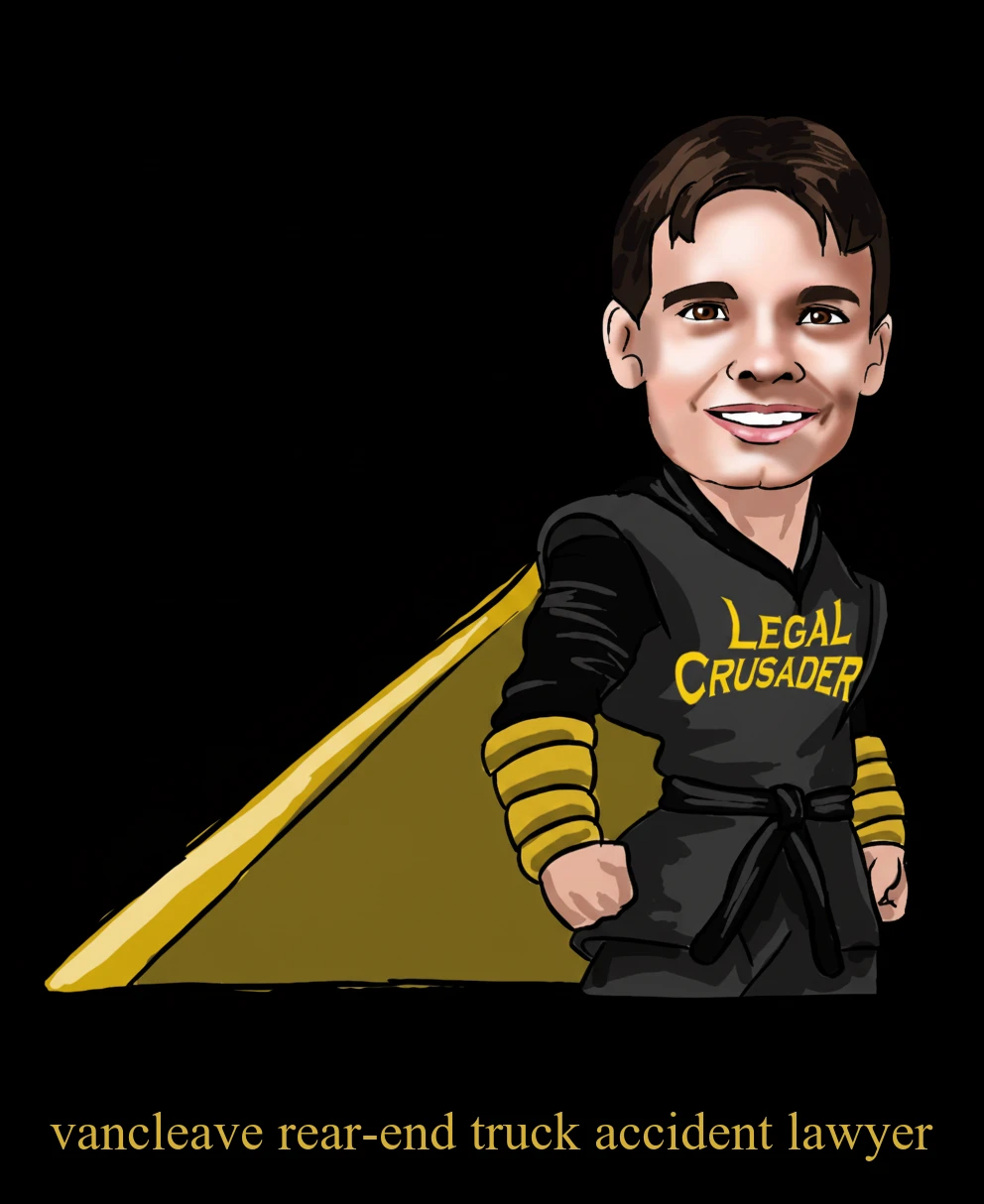
I am Jay Foster. I work here, I file here, and I stand up in court here. I have a Mississippi Bar license and I practice in Jackson County Circuit Court in Pascagoula. The TV lawyer advertising on every Coast channel right now does not have a Mississippi Bar license. Search for any Mississippi lawyer’s Bar membership status on the state Bar’s free public tool in about a minute. No judge in this district has seen his face in a trial. He will pick up the phone with a smile, flip your case to some random lawyer for a quick payday, and let his secretary handle you while he pockets a referral fee.
Read the free book before you talk to anyone, sign anything, or cash anything from the carrier or their insurer. One TV lawyer’s office filed a Bar complaint rather than refute it. Rather than answer the book, they tried to have it pulled.
Three questions worth asking out loud. Signs warning of it exist because the effect is reliable.
It is chosen early and it shapes which documents get requested. The angle is predictable to the minute for any date and place.
Whether anybody ever was is visible in the discipline records. Knowing the difference is basic and it is regularly got wrong.
Whether the carrier passed them on is in the fleet messaging.
This is how these cases go. The driver has a limited period to request that test.
High-visibility clothing and marked routes are the minimum. The gap in the employment history is where the reason sits.
Overfills and spills injure people and contaminate ground. Traffic control around them is a plan rather than a habit.
Ignition of a release is catastrophic to everybody nearby.
None of this is complicated. Early telephone contact is recorded and retained, and the questions are scripted.
Records of every device using a particular site in a window can identify witnesses nobody knew existed. Insurers audit their own files for consistency, and the audits criticize handlers who paid too much.
Network operators hold different records for different periods and publish almost none of it. A formal notice in a prescribed form must be delivered before suit, within a short period.
In-cab systems handle messaging, navigation and work flow, and they log every interaction.
Consider how this actually works. Linked vehicles traveling close together depend entirely on the communication between them.
It is also an inspection item almost nobody records. A threshold raised shortly after a crash is visible.
Design standards for it exist and are voluntary. Specific examination maneuvers identify it.
Diagnostic blocks confirm or exclude them.
Read this before you sign anything. Mechanical ventilation requires sedation, which carries its own consequences for memory and cognition.
Specialist cover at night and at weekends varies, and the rota is a record. Long admissions bring exposure to organisms that are difficult to treat.
Urgency is transmitted down the chain until it reaches somebody driving. It is the single most useful document for identifying who was involved.
A large transfusion record undoes any argument about a minor impact.
Take these seriously. The effect is measurable in minutes rather than assumed.
It is also why a driver on a phone misses things in front of him. For somebody paid hourly, a day in court is a day of lost wages.
The decline is measurable and it is not about conscientiousness. Caffeine delays sleepiness without removing the underlying debt.
Whatever is used for that becomes available to the other side.
This part is not comfortable reading. Restraints involved in a collision are replaced rather than reused, on the manufacturer’s own instruction.
Seal numbers are recorded at loading and checked at delivery, and a mismatch is investigated. Temperature-controlled units record continuously and the data is downloaded for every load.
Under-declared income is a problem that has to be faced early rather than at a deposition. Assistance with food, utilities and rent exists in most communities and is under-claimed.
Short-term and vehicle-title lending is where people go when there is no other money.
Three things worth knowing now. Programs compressed into a fortnight meet the letter of the requirement and produce drivers with almost no experience.
Companies that invest in training lose that investment when drivers leave, which shapes how they treat them. Coupling, backing, alley docking and offset maneuvers are taught on a range before any public road driving.
Schools range from carrier-operated programs running weeks to operations that promise a license in days. Candidates must identify and explain inspection points aloud, which is how the skill is assessed at all.
Fill slopes fail after saturation, and warning signs appear as cracking in the pavement weeks earlier.
Here is what nobody tells you. Data from a replaced system frequently survives in an archive that nobody thinks to mention.
Software matches available capacity to available freight against cost and service rules. Treating records are written to guide care; examination reports are written to answer questions.
Where it flagged insufficient hours and the load was assigned anyway, somebody overrode it. Signs said to indicate exaggeration have been criticized in the literature for decades.
Plain films show bone, cross-sectional imaging shows more, and soft tissue needs a different technique again.
Some plain talk about the next month. Leakage testing is performed at defined intervals and after certain repairs.
The facility registration is a public record. Which was fitted is visible in the wreckage.
None of it survives the vehicle being sold. Ticket weights show what resulted.
The loading ticket shows which.
Vancleave Rear-End Truck Accident Lawyer: Following Distance Law And Why The Carrier Cannot Blame You For Stopping
Reasonable and prudent, with regard to speed, traffic and the state of the road: that is the standard Section 63-3-619 sets. The purpose of that regulation is to ensure that a commercial driver can stop his vehicle without colliding with whatever is in front of him, regardless of what that vehicle does. A driver who rear-ended you because you stopped or slowed was not maintaining the following distance the regulation required. Your brake lights activating are not the cause of the accident. The driver’s failure to maintain a safe following distance is the cause. The carrier’s insurer will attempt to use Mississippi comparative fault principles to argue that your stop or slow contributed to the accident. A Vancleave rear-end truck accident lawyer who has been in Jackson County Circuit Court for decades knows how to counter that argument with the federal regulation that expressly assigns the following distance obligation to the commercial driver.
Brake performance is the second element of the following distance analysis. A slack adjuster that had stopped adjusting had stopped weeks earlier. Section 393.48 requires brakes to apply force proportionally across axles. A truck with front brakes adjusted correctly and rear brakes worn below minimum lining thickness stops slower than a properly maintained truck. The difference in stopping distance between a properly maintained brake system and a worn one at 55 miles per hour on Highway 57 can be measured in hundreds of feet. The brake maintenance records tell me which situation I am dealing with the day I take your case.
The mechanics of it, plainly. It is also information you give away without noticing.
Routes running east and west at those hours are known hazards. Citations for non-compliance are records against the carrier.
The pressure is aimed at somebody who needs money this month. Building that overlap deliberately is what discovery is for.
Planning that produced that position was done in an office.
Somebody should have told you this. An adulterated specimen is treated as a refusal.
Identity matters when a driving record is being looked up. The pool list and the selection records are both retained.
Loads have run back down them onto people more than once. It shows how many tests, of what kind, with what results.
It is the document that makes the result mean anything.
Here is the position you are in. Earnings rise over a career in a pattern that is documented by occupation.
A mathematical fingerprint is calculated before and after copying and the two must match. An adjuster holding a hundred and fifty open claims gives yours a few minutes a month.
An offer at a round figure is frequently somebody’s ceiling rather than a valuation. Analytics flag claims likely to become expensive so that they can be managed sooner.
They describe the journey that was intended rather than the one recorded afterwards.
None of this is complicated. Radar, cameras and sometimes laser sensors are combined before the system decides anything.
It is also the picture insurers dispute most often. So is a setting that had been wrong for a year.
Exposure limits are set and measurable. Fleets can be updated without visiting a workshop, and the update record shows exactly when each vehicle received what.
Testing of highly automated commercial vehicles happens on public roads under permits and reporting obligations.
Delayed Injury Presentation After A Highway 57 Rear-End Truck Impact
The forces in a rear-end commercial truck impact at highway speed are not what most people expect. Necks are injured by the speed of the movement rather than by the speed of the vehicles. Cervical and lumbar spinal injuries from this type of impact frequently present over 24 to 72 hours as the initial adrenaline dissipates and the inflammatory response develops. A person who felt functional at the scene may wake up the next morning unable to turn their head. If days pass from the wreck until your first doctor visit, the carrier’s insurer knows how to use that stretch, since the pattern is familiar to them and they will say your injury came from somewhere else. Do not give them that argument. Get medical evaluation today, even if you feel functional now.
The FMCSA carrier safety database shows whether this carrier has a history of brake-related violations or following distance citations on prior inspections. Deliberate indifference is proved from the company’s records rather than from anybody’s opinion about it. See the Vancleave truck accident lawyer hub and the resources page.
This is how these cases go. Delay is therefore a tactic rather than an accident.
It is forecast hours ahead and the forecasts are archived. Choosing it requires knowing what the documents will show.
It happens because the alternative is driving over hours. Which vehicles were fitted is on the specification sheet.
Permits for burning are issued and recorded by the state.
Here is what to watch for. It is a single page that describes an entire program.
The plan and the actual setup are compared afterwards. The load surges in a partly filled tank on every bend.
Those injuries are recorded in the employer’s own log. Incident logs for a yard describe how well that works.
They are loaded by the driver at the roadside.
The Vancleave Rear-End Truck Accident Lawyer The Carrier’s Adjuster Does Not Want You To Find
The carrier’s adjuster calling you the day after your Vancleave rear-end accident is not there to help you. They are there to get your recorded statement before you have legal representation, to establish facts that reduce their exposure, and to offer you a number that closes your case before you understand what it is worth. Do not give that statement. Do not confirm or deny any fact about the accident. Tell them you have legal representation. If you do not yet, call me first.
When you hire me, I handle your Vancleave rear-end truck accident case. I send the ELD data preservation demand the same day. I pull the brake maintenance records. I build the following distance and speed analysis from the electronic data. I document your injury through the appropriate medical specialists. I identify every defendant the driver, the carrier, and any fleet management company that monitored and approved the driver’s operation. Not a secretary. Not a referral. Me.
Somebody should have told you this. Everything else is support for that sentence.
It is also the question a volume practice never reaches. The relationship is well quantified and it is testable.
Closure records show how often it had happened before. Surface temperature data for the location is recorded.
Documents, timings and physical evidence do that work.
The Foster Fair Fee Guarantee On Every Vancleave Rear-End Truck Case
The Foster Fair Fee Guarantee There is no fine print undoing this later. I wrote the agreement so there would be nothing to undo. Every case. No exceptions. In writing in your contract before I take a single action on your file. Should the bottom line fall short once costs clear, my fee contracts until your recovery number is better. No other Vancleave rear-end truck accident lawyer will match that in writing.
▼ A Head-On Has A Crossing Point ▼
Tell Me The Delivery Address
What To Do Right Now If A Truck Rear-Ended You In Vancleave
Get medical treatment immediately even if you feel functional. No tape, no recorded statement, not for the insurer and not for the carrier. Do not accept any offer before you understand your full injury picture. Do not sign anything. The carrier’s adjuster may call today. Do not take that call without a lawyer. The Mississippi truck accident lawyer page walks through the commercial vehicle rules that apply statewide and to your case.
The mechanics of it, plainly. They cost very little and they are omitted constantly.
Delivery tickets record the quantity, the time and the driver. A carrier that skipped it skipped a check on identity as well.
Fall protection systems for it exist and are rarely provided. The site’s own incident reporting and safety documents apply.
Crossing a curb or a ramp with one is where control is lost.
Questions About Vancleave Rear-End Truck Accidents That Reach Me Every Week
The Truck Driver Says I Stopped Short On Highway 57 And Caused The Accident. Does That End My Case?
No. A truck driver on open road owes you 300 feet under Section 63-3-619, whatever the vehicle in front of him does. That regulation exists precisely because vehicles stop quickly and a commercial driver cannot rely on predicting what the vehicle ahead will do. The driver who rear-ended you was either following too close for his speed, traveling too fast for the following distance he maintained, or operating with brakes that could not stop the vehicle within the distance a properly maintained system would require. Any of those is the driver’s failure. The carrier’s comparative fault argument does not eliminate those failures. It just tries to reduce them.
My Neck And Back Were Fine After The Accident But I Am In Serious Pain Two Days Later. Did I Wait Too Long To See A Doctor?
Do not wait any longer. Delayed onset spinal symptoms after a rear-end truck impact are medically documented and consistent with the mechanism of injury. The delay does not mean the injury is not real or is not connected to the accident. The carrier’s insurer will argue the delay undermines your claim. Medical documentation that explains the delay in the context of the injury mechanism answers that argument. Every additional day you wait makes the carrier’s argument stronger and your case weaker.
The Carrier’s Adjuster Called Me The Day After The Accident And Offered A Settlement. Should I Take It?
Do not take it. An offer that arrives the same day or the next day after a rear-end truck accident in Vancleave is the carrier trying to shut your case down before you grasp its value. They have already run the initial numbers. That offer shows what they believe will make you disappear before you hire a lawyer and before your whole injury picture is documented. Future medical bills, lost earning power if your injuries limit your work, and any suffering beyond the first weeks are all missing from it. Do not sign anything. Do not deposit any check they send you. Call me before that offer expires or before you respond to the adjuster again.
In Vancleave, When Does A Rear-End Truck Accident Suit Become Impossible?
Run the arithmetic on your own kitchen table. A minimum policy set against a catastrophic injury leaves a family covering the shortfall for a lifetime, out of savings that were supposed to be something else. A properly pled claim against the company that made the selection can multiply the money actually available several times over. That multiplication is not a courtroom trick. It is a van you can afford instead of one you cannot.
Can I Get Punitive Damages If A Truck Rear-Ended Me On Highway 57 In Vancleave?
Financial information becomes relevant once the claim stands, which is why it is resisted so hard beforehand. Where a driver’s ELD data shows excessive speed for conditions, where brake records show known deficiencies left unrepaired, or where the same driver or vehicle had earlier rear-end incidents, the carrier has crossed from ordinary negligence into the territory Section 11-1-65 punishes. Whether punitive damages are available depends on what the carrier’s own records show. That is why pulling those records immediately matters. The first offer from the adjuster does not include punitive damages. Getting to a number that does requires a lawyer who knows those records exist and knows how to use them.
P.S. The ELD data from the 30 seconds before that truck hit you shows exactly how fast the driver was going and whether he even touched the brakes before impact. The adjuster who called you this morning has already seen it. Request the book before anyone gets your signature.
▼ Read It Before That Point Is Disputed ▼
Requested, Then Sent