Biloxi: 228-435-3000 | Ocean Springs: 228-872-6000 | Hattiesburg: 601-583-5000
Long Beach Longshore Lawyer: The Shipyard Is Ten Minutes Away And The TV Lawyer Has Never Filed A Single Federal Longshore Claim In Harrison County
Long Beach sits between Gulfport and Pass Christian on Highway 90, a residential community built for people who work somewhere else. The Naval Construction Battalion Center is minutes to the east in Gulfport, the 1,100-acre installation that has been home to the Atlantic Fleet Seabees since 1942. The Gulf Ship facility on Seaway Road in Gulfport, Bollinger Gulfport Shipbuilding on Bayou Bernard, and Gulf Coast Shipyard Group are all within a short drive. The Port of Gulfport handles commercial cargo year-round. A significant number of Long Beach residents put on work clothes every morning and drive to one of those facilities. A Long Beach Longshore Lawyer is who you need when the shipyard sits in the next town and the claim is federal.
When one of those workers gets hurt on a covered maritime worksite, the Longshore and Harbor Workers’ Compensation Act governs what happens next. Not Mississippi workers’ compensation. Federal law. A federal system administered by the U.S. Labor Department’s Longshore claims division, with hearings before federal Administrative Law Judges in the New Orleans district.
The TV lawyer running ads on Highway 90 through Long Beach has never been in that hearing room. He has never filed an LHWCA claim in Harrison County. He took your call, assigned you a file number, and handed you to a case manager, a secretary with a different business card, who is now managing your federal claim with no law degree, no Bar license, and no experience in the system that will determine your financial future. The carrier knows this. The offer they made reflects precisely what they know your lawyer can and cannot do.
Why A Long Beach Longshore Lawyer Has To Actually Work Inside The Federal System
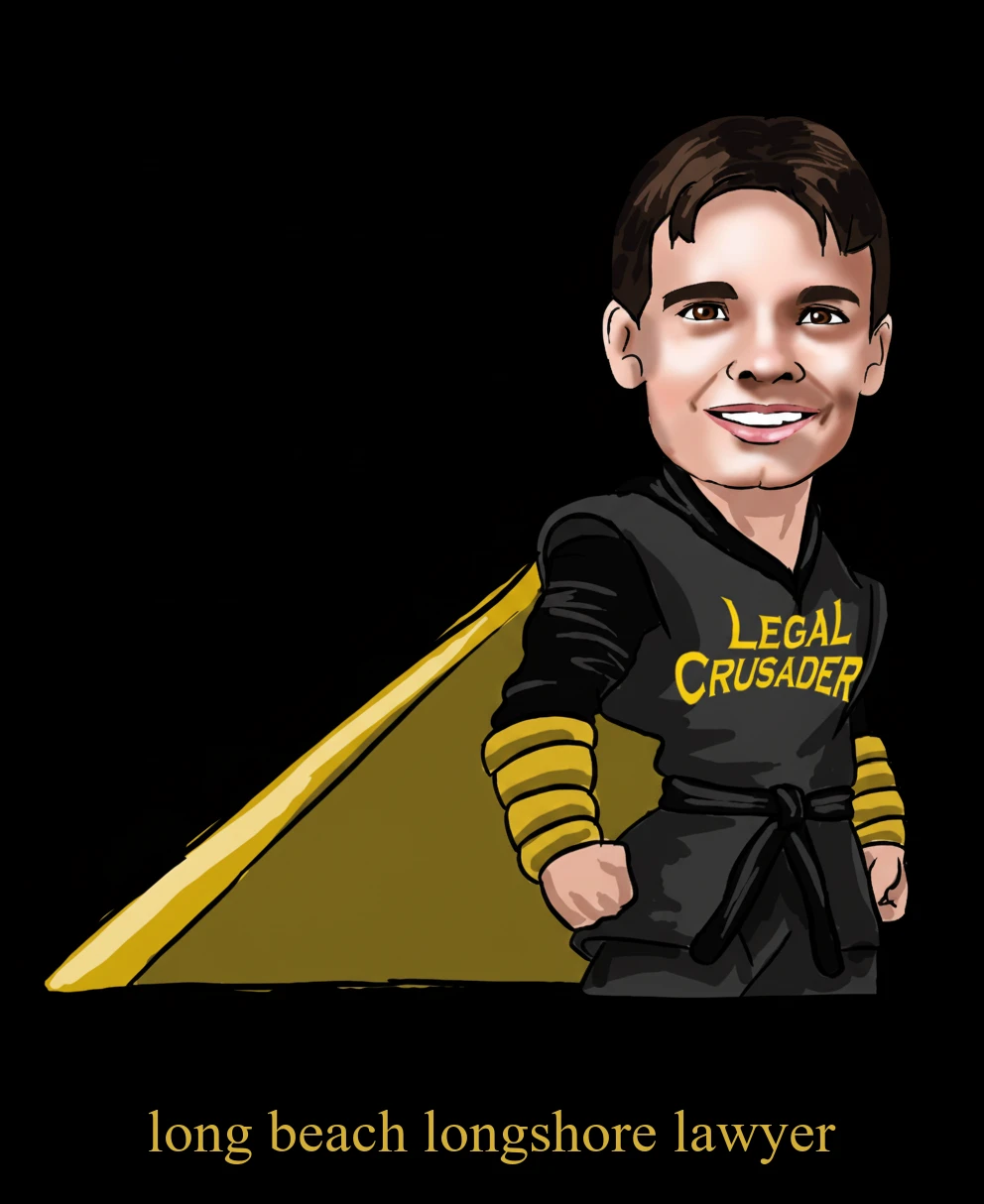
I am Jay Foster. The Legal Crusader. I have practiced law on the Mississippi Gulf Coast for decades. I know the federal longshore system. I know the DOL Longshore division. I know the Administrative Law Judges in the New Orleans district. Only one lawyer in Mississippi has a fee agreement that GUARANTEES, in writing and before the work begins, that you pocket more money than the lawyer does, and that lawyer is me. Every case. No exceptions.
You can verify any Mississippi lawyer’s Bar license status in sixty seconds at the Mississippi Bar’s public search. The TV lawyer advertising on Gulf Coast television is not licensed in Mississippi. He cannot walk into Harrison County Circuit Court. He absolutely cannot stand in front of a federal ALJ on your behalf. What he can do is take your call, collect a fee from your settlement, and make sure his share is larger than yours.
Every Claim A Long Beach Longshore Lawyer Takes For Workers In This Community
Shipyard injuries at Gulfport facilities. On Seaway Road, Gulf Ship builds and maintains tractor tugboats along with platform supply vessels that serve offshore oil operations. Bollinger Gulfport Shipbuilding on Bayou Bernard is a 69-acre facility serving as a major support operation for Bollinger Mississippi Shipbuilding in Pascagoula. Gulf Coast Shipyard Group operates on the Gulfport waterfront. Workers injured at any of these facilities during covered maritime work have LHWCA claims, not Mississippi workers’ compensation claims. The law that applies determines the benefits available, the deadlines, and the hearing process. Getting it wrong from the start costs you benefits you can never recover.
Port of Gulfport injuries. Ports America and other terminal operators at the Port of Gulfport employ stevedores, crane operators, equipment operators, and dock workers whose injuries on the navigable waterway or adjoining areas fall squarely within LHWCA coverage. The carrier defending those claims handles federal longshore cases professionally. Your lawyer needs to as well.
NCBC civilian contractor injuries. The Naval Construction Battalion Center in Gulfport employs thousands of civilian contractors alongside military Seabees. Civilians working at U.S. military installations under government contracts may be covered under the Defense Base Act, an extension of the LHWCA administered by the same DOL Longshore division. If you work as a civilian contractor at NCBC Gulfport and you were hurt on the job, your claim may not be a Mississippi workers’ compensation matter at all. It may be a federal Defense Base Act claim, which requires the same federal system expertise as an LHWCA longshore claim. This is not a question to guess at. The injured contractor who never asked which system applies is the one whose carrier picked the answer that paid the least.
Commuter injuries at Pascagoula yards. Some Long Beach residents drive east to Ingalls Shipbuilding or Bollinger Mississippi Shipbuilding in Pascagoula. Your home address in Long Beach does not change the federal law that governs what the carrier owes you. I handle LHWCA claims for Harrison County workers who work at Jackson County facilities.
Occupational disease and hearing loss. Shipyard and port noise, welding fume exposure, and hazardous material contact over years of employment create conditions the LHWCA covers. These claims are time-sensitive and frequently undervalued by carriers. Early legal involvement is essential.
Death claims. The LHWCA provides survivor benefits when a covered worker dies from a qualifying work injury. These claims require immediate action to protect your family’s rights.
Long Beach: The Community The Shipyard Workers Built Their Homes In
Long Beach has been a residential retreat on the Mississippi Gulf Coast since the 1800s, when wealthy families from New Orleans and the interior built summer homes along its beaches. The community that grew from that history became one of Harrison County’s most stable residential cities, a place people chose to live, not just pass through. The schools, the neighborhoods along the beach corridor, the connection to Highway 90 that puts Gulfport’s industrial waterfront within ten minutes, all of it makes Long Beach a natural address for the workforce that drives to the shipyards and the port and the NCBC every shift.
When those workers get hurt, the federal system that governs their claim does not know or care that they drove from Long Beach. It cares about where the injury happened, who the employer was, and whether the carrier’s adjuster gets to manage the claim unopposed or faces a lawyer who knows the system as well as the adjuster does.
Harrison County government resources and circuit court information are available through the Harrison County official site. For emergency medical care, Memorial Hospital at Gulfport serves Long Beach workers throughout the region.
The Case Manager Is Not Your Lawyer And It Matters More Than You Know
The TV lawyer’s intake process assigned your file to a case manager. She calls you back with updates. She sounds organized and professional. What she is, legally and practically, is a secretary with a fancier title. She has no law degree. She has no Bar license. She has no authority to give you legal advice, evaluate your LHWCA benefits, challenge the carrier’s IME doctor’s report, or appear in any federal proceeding. She is processing your file the way a data clerk processes paperwork.
The carrier’s adjuster, who handles LHWCA claims every week, knows exactly what she is. He knows the settlement history with that firm. He knows the number that closes files from that call center. Every offer he makes is calibrated to that knowledge. It has nothing to do with what the law actually requires him to pay. It has everything to do with what he has learned that firm will accept.
When I take your case, I handle it. I am the one you speak with. Not a case manager. Every call. Every decision. From the first conversation to the day your check arrives.
The Adjuster Opened Your File. What He Did In The First 72 Hours.
He requested a recorded statement. Every word you say in that recording, about the incident, your pain level, your ability to work, your prior medical history, becomes part of the case record. The adjuster asking those questions has done this hundreds of times. He knows which questions produce answers that limit carrier exposure. You are not legally required to provide that statement before consulting with a lawyer. That recorded statement is step one in a sequence built to shut your file at the lowest figure the carrier thinks it can slide by with. Most workers participate in it because no one ever told them they did not have to.
He scheduled you with the carrier’s IME doctor. That doctor is paid by the carrier. His reports consistently minimize injury severity because that result serves the carrier’s financial interest. Your own treating physician may completely disagree. The LHWCA has specific procedures for resolving competing medical opinions, but only if your lawyer knows how to invoke them correctly and at the right time.
He is watching your social media. Every post, check-in, or photo that appears inconsistent with your reported limitations goes into your file. Go dark until your case is resolved.
The Rules On That Worksite Exist For A Reason
Behind each safety rule on a Harrison County worksite, whether at the Port of Gulfport, at the shipyards on Bayou Bernard or at the NCBC, sits a day when missing that rule caused an injury or a death. Employers who cut corners below those standards and carriers who dispute legitimate claims are accountable in the federal hearing system. The carrier sends experienced attorneys to those hearings. The judges are familiar faces to them. They know the procedural arguments. Beating a lawyer who has no grasp of the system is something they do well.
Put someone in that room who understands it better than they do.
Three Mistakes Long Beach Longshore Workers Make That Cost Them Everything
First mistake: treating the federal claim like a Mississippi workers’ comp claim. The systems are entirely different. Different benefit formulas. Different deadlines. Different hearing procedures. Different appeals. A lawyer who handles Mississippi workers’ compensation but has never tried a federal longshore case is not equipped to maximize what the LHWCA requires the carrier to pay. The carrier knows the difference. Your settlement offer reflects it.
Second mistake: not getting a lawyer involved immediately. You have thirty days to notify your employer and one year to file a formal claim. Both deadlines are hard. Evidence preservation demands need to go out within days of the injury. Security footage at port facilities and shipyards overwrites on short cycles. The carrier’s file is growing from day one. The injured workers who recover what their case is worth are the ones whose lawyers were on the file before the second week.
Third mistake: not asking whether your injury is covered by the LHWCA, the Defense Base Act, or Mississippi workers’ comp. If you work as a civilian at the NCBC or under a government contract at a covered military installation, the system governing your claim may not be what you think it is. Getting the wrong system costs you benefits you cannot recover retroactively. The analysis takes one phone call. The injured worker who never asked is the one who got the answer that paid the least.
The Foster Fair Fee Guarantee: The Promise No TV Lawyer Will Ever Put In Writing
Before we start, I guarantee in writing that you will put more money in your pocket than I do. Not after the case closes. Before we begin. In writing. Every client. Every case. No exceptions.
One TV lawyer hated that guarantee so much he ran straight to the Mississippi Bar and filed a complaint against me to try to shut it down. Not match it. Not put up his own version. Stop it. The Bar threw it out. But the complaint is in the public record and you can go look at it for yourself. Here is what that one piece of paper tells every working man in Harrison County. His whole business is built on the same shell game every TV lawyer runs. Forty percent off the top of your settlement. Thousands more in case expenses subtracted before you see a dime. You walk away with the scraps while the lawyer who never met you and never walked into a courthouse walks away with the lion’s share. A written promise that flips that math around is a threat to that whole operation. His first move was not to compete. His first move was to try to make the Bar take my guarantee down. That is not the move of a lawyer who wants more money in your pocket. That is the move of a lawyer scared to death you might find out the difference.
Read the full Foster Fair Fee Guarantee before you sign anything with anyone. Then ask the TV lawyer to match it in writing. What you hear next tells you everything.
The $5,000.00 Double Dare For Every TV Lawyer Advertising On Highway 90
I will pay you $2,500.00 cash if the TV lawyer whose face is on the billboard personally handles your longshore case from the first call to the final check. Every phone call. Every hearing appearance. Every filing. Personally. I put up a second $2,500.00 if the TV lawyer from that billboard personally stands in the hearing room and argues for you with a federal Administrative Law Judge presiding over in the New Orleans district at the U.S. Department of Labor.
Five thousand dollars. Cash. If the face on the billboard does the actual work.
Nobody has ever collected. Nobody ever will.
▼ Get Your FREE Book Right Now ▼
Fill Out The Form Below And I Will Send It Immediately
Frequently Asked Questions From Long Beach Longshore Workers
I Work At The NCBC In Gulfport As A Civilian Contractor. Does The LHWCA Cover Me?
Possibly not the LHWCA itself, but the Defense Base Act, which is an extension of the LHWCA administered by the same DOL Longshore division, may cover you. The Defense Base Act covers civilians working at U.S. military installations under government contracts. If you were injured at NCBC Gulfport while working as a private-sector contractor on a government contract, your claim may be a Defense Base Act matter rather than a Mississippi workers’ comp claim. The benefits available, the deadlines, and the hearing process are all federal, and they are all outside the experience of the TV lawyer’s case manager. The injured contractor who never asked which system applies is the one whose carrier picked the answer that paid the least.
My Employer Says My Injury Is Covered By Mississippi Workers’ Comp Not The LHWCA. Should I Trust That?
No. Your employer’s coverage determination serves the employer’s financial interest. The Mississippi workers’ compensation system is generally less favorable to injured workers than the LHWCA for maritime injuries. Whether the LHWCA applies requires a legal analysis of where the injury occurred and what your work involves. An employer claiming you fall under state workers’ comp when you may actually be covered under the federal system is a tactic that costs you money. Most workers accept the coverage determination because no one ever told them they had the right to challenge it.
I Live In Long Beach But Was Hurt At Gulf Ship In Gulfport. Where Do I File?
The LHWCA claim follows the injury and the employer. Gulf Ship is a covered maritime employer on a covered maritime situs. Your claim is a federal LHWCA matter filed through the Department of Labor, processed through the New Orleans district. Your Long Beach address is irrelevant to the system. What counts is having a lawyer who knows that system and can take on the insurance company in the hearing room where disputed claims actually get decided.
What Are My Benefits Under The LHWCA?
You draw two-thirds of your average weekly wage, bounded by federal minimums and maximums that are updated annually, for as long as you cannot work. Full medical treatment coverage with no out-of-pocket cost. Permanent impairment benefits for specific body parts under the Act’s scheduled benefit structure. Vocational rehabilitation if you cannot return to your prior occupation. Survivor benefits if a work injury causes death. The carrier calculates all of these numbers in the way that minimizes their exposure. An experienced longshore lawyer calculates them the way that maximizes what the law requires them to pay.
How Long Does A Long Beach Longshore Claim Take?
Uncontested claims resolve when medical treatment is complete and impairment is rated. Disputed claims go to a federal ALJ hearing, often a year or more from filing to decision, with additional time on appeal to the Benefits Review Board. The earliest decisions you make, including who represents you and whether you give a recorded statement, shape how long and how hard the carrier fights. Workers who lock those decisions in correctly during the first thirty days end up with shorter, cheaper, more favorable claims than workers who decide them under pressure six months in.
I Unload Ships At The Port Of Gulfport. The Carrier Says My Job Does Not Qualify As Longshore Work. Is That Right?
That argument is one of the oldest moves in the carrier’s playbook and it is frequently wrong. Stevedores, crane operators, and dock workers loading and unloading cargo on the navigable waters of the Port of Gulfport or on the adjoining wharf areas are precisely the workers the LHWCA was written to protect. The situs and status tests are legal questions, not questions the carrier gets to answer unilaterally in their own favor. Carriers routinely use this denial to pressure port workers into accepting far less than the federal system required them to pay. The denial only works when the worker accepts it without challenge.
The Takeaway: Your File Is Already Open At The Carrier
Long Beach workers drive to Gulfport every morning to do work that keeps ships moving, ports operating, and military construction forces equipped. When the carrier decides to fight a legitimate federal claim from one of those workers, they are counting on that worker not knowing the federal system and not having a lawyer who does.
I have been in that system for decades. My office is in Ocean Springs, fifteen minutes east on Highway 90. The consultation is free. From the day you got hurt, the carrier’s clock has kept ticking. Once you have had enough of them working that file while nobody stands on your side, pick up the phone and call me at 228-872-6000.
Your TV lawyer has never argued a classification dispute in a federal longshore hearing. He will say these claims are no problem. He will not say how few of them he has actually filed.
Whether LHWCA coverage or a different federal maritime rule applies depends on exactly what task you were doing and exactly where on the vessel it happened. Getting that wrong costs you real money, and the carrier has no reason to volunteer the classification that pays more.
The carrier’s own lawyers have sat through this exact process more times than you can count. Your TV lawyer has not. He is learning the system on your case, for the first time, while the other side already knows every move.
I have spent decades arguing these classifications in federal longshore hearings on this coast. I know which arguments move an administrative law judge, because I have already moved several.
The average weekly wage, the annual compensation rate, and your disability classification all affect your final number. Your TV lawyer does not check any of that math himself.
Gulf Ship and Bollinger Gulfport workers face a particular trap when an injury happens on a vessel under construction. Whether LHWCA or a different federal rule applies can hinge on exactly what you were doing when it happened.
Getting that classification wrong costs you real money. Your TV lawyer has no idea the classification question even exists.
The carriers insuring Gulfport’s shipyards have entire teams dedicated to paying out as little as the law allows. Going up against that with a lawyer who has filed one or two of these claims starts the fight already outmatched.
I have argued these classifications in federal longshore hearings on this coast for decades, and I know which arguments actually move an administrative law judge. Your TV lawyer is still learning the difference between a formal hearing and an informal conference.
Reading about the LHWCA in a textbook and standing up in a federal hearing room arguing it are two entirely different skills. Your TV lawyer has only ever done the first one.
I check that math on every claim before I let a number get discussed, because a mistake there costs real money every week you remain out of work.
P.S. The Foster Fair Fee Guarantee is in writing before we start. Read it here and then ask the TV lawyer to match it. His answer tells you everything you need to know about who is actually fighting for you.
P.P.S. If you work at Gulf Ship, Bollinger Gulfport, or the Port of Gulfport, see the Gulfport longshore lawyer page. For the statewide Mississippi overview, see the Mississippi longshore lawyer page. Workers driving to Pascagoula can also see the Pascagoula longshore lawyer page.
▼ Get Your FREE Book Right Now ▼
Fill Out The Form Below And I Will Send It Immediately